 editor
 Micro-learning, which falls under the category of skill-based learning, is emerging as a rapidly growing segment of education. The global market for micro-learning was valued at USD 3.38 billion as of 2022, with a growth projection to USD 25.36 billion in the near future (reflecting a compound annual growth rate of more than 20%).
In the same vein, blended learning, incorporating digital, hands-on, and skill-based learning, was valued at USD 20.2 billion in 2022 and is expected to reach near USD 50 billion by 2030. The blended learning figure is based on projections related to the growth of new technological capabilities within education, skill, and professional training sectors.
This marks a profound change in education as it moves away from class time and rote learning towards measuring education through skill performance, and with greater flexibility in how, when, and where it is completed.
Defining Skill-Based Learning
Skill-based learning focuses on a learner’s capabilities and is dedicated to developing competencies that are practical and transferable.
A good understanding of skill-based learning includes these competencies:
- Effectively working with and through other people, which can also be called communication or digital literacy.
- Critical thinking and adaptability in real-world contexts.
- Relevant modern workplaces and advanced learning environments demand the ability to think critically, collaborate, and adapt.
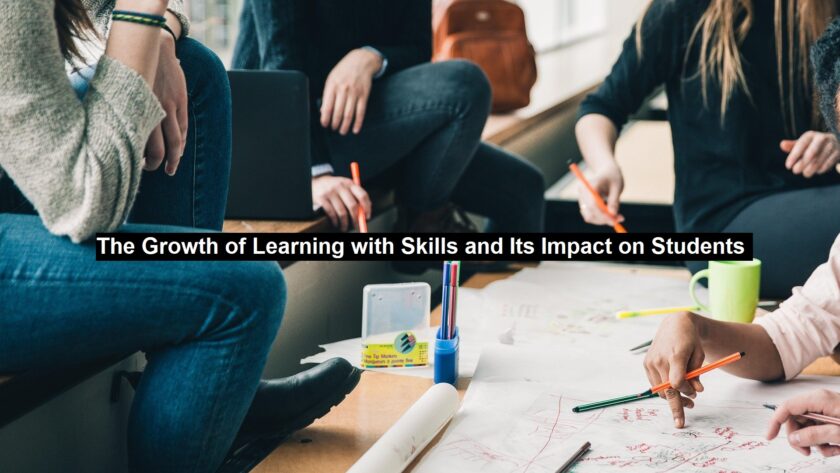
Learning by doing, also called active learning.
Engaging the learner through active participation as opposed to passively sitting through a lecture is called active learning. Work-integrated internships, co-ops, and apprenticeships placed in the curriculum.
Read: The Importance of PTE Academic Exam While Applying for a Study Visa
Why the Shift Now?
Real-World Relevance & Employability
In a report, employers claim that many graduates lack the soft skills and problem-solving skills that are essential for a workplace. New research into industry certification pathways, such as integrating university degrees with a certification like Microsoft’s AI-900, shows that graduates from non-technical fields can increase their job-market alignment by more than 9,000% compared to the gains with just academic credentials.
2. Improved Learning Outcomes
STEM gets significantly more effective as active learning approaches are applied. A meta-analysis shows that students are 1.5x less likely to fail and score 6% higher on exams compared to students in lecture-based classes. A meta-analysis that controlled for a higher number of studies than in prior work, 225, showed failure rates drop from 32% to 21% and the average performance increase by 0.47 standard deviations when active learning strategies are applied to the curriculum.
Likewise, PBL and inquiry-based methods have improved standardized test scores in science by 13 to 14 percentage points and closing gaps for underrepresented students.
3. Equity and Engagement
Active learning disproportionally benefits underserved groups by closing gaps, increasing retention, and supporting persistence in STEM Real-world relevance, feedback, and motivation also engage students, making lessons more interesting and beneficial to diverse learners.
Student Impact: From Classroom to Career
Creating Transferable Competencies
Skill-based learning builds the ability to succeed in multiple roles and industries. PBL and WIL fosters learning agility, project management, teamwork, and self-directed learning.
Advancing education and careers
Empirical evidence from vocational training programs indicates a strong economic return. In Nepal, trainees increased non-farm employment by 10 percentage points and compliant participants increased that by up to 31% while also earning more, especially women who utilized self-employment through home-based businesses.
To some extent, the outcome-based qualification programs in India, such as the Skill Impact Bond SIB Initiative, show what is possible with outcome-linked skilling. Out of the nearly 24,000 youth trained, 72 percent of whom were women, 75 percent of them got jobs. Of those, 60 percent retained employment for over three months, which is well above the national averages .timesofindia.indiatimes.com Contrastingly, the PM Kaushal Vikas Yojana scheme has only managed to achieve job placements for 15 percent of the 16 million people it has trained.
Learning for Life & Resilience
Skill-based education enables a learner to continuously reskill. Sustained digital transformation, as well as shifts in the labour market, make it imperative to keep pace at all levels of education, as McKinsey has pointed out .mckinsey.com. Additionally, models that combine personalized certification with OER, open educational resource, have shown that 80 percent of learners deem the provided OER as useful for their professional growth. researchgate.net arxiv.org.
Overcoming Design Challenges
Reduction of Cognitive Load and the “Expertise Reversal Effect”
Education in this model, the design and educational strategy, must use the appropriate sequence of instructions. This is a sequence where the novice is heavily guided, but as the students learn and grow, the structure is relaxed as a result of learner controlled environments. This well understood phenomenon in educational psychology is called the expertise reversal effect Wikipedia.
Assessment Transformation
The old method of high-stakes exams and time seated in a classroom is now being replaced with assessments that are high in competencies and skills. There are changes being made in the United States that are doing away with the Carnegie Unit and are trying to find ways to measure soft skills such as critical thinking, collaboration, and creativity in a fair and meaningful manner.
Equity & Access
If one of the soft skills being assessed is poorly designed, an inequity gap can open. As shown with India’s SIB initiative, there are schemes that focus solely on enrollment and do not retain or focus on ensuring quality, demonstrating the need to prioritize quality in training that is directly linked to outcomes.
In simpler terms, here is what the change means for students.
- Increased success rates because active learning is proven to yield better results.
- Documented Proof: Achievements such as transcripts and certifications provide. Grade’s no longer define what students are capable of.
Education that is shaped by what the students are interested in, allows for creativity and the development of self-driven tasks through real-life experience.
For learners, the change brings:
- Education in line with competencies sought by prospective employers.
- Improved outcomes: Active learning and evidence-based teaching strategies increase retention and lower failure rates.
- Competence-based transcripts and certifications provide better proof of skills than traditional grading.
- Flexibility, autonomy, and self-directed learning strengthens the learner’s agency. Students are navigator and designers of their learning.
From the perspective of a school or a higher learning institution, there are also shifts that need to take place in order to remain relevant, such as:
- Integration of self-directed projects as learning as well as through work-experience.
- Retooling faculty to utilize evidence-based teaching practices and adaptive teaching.
- Establish reliable measures to assess skills-based results.
- Work with industries and employers to ensure the curriculum and credentials are in line with labor market demands.
Final Remarks
Skill-based education is changing the way learning is structured and evaluated and is furthered by micro-learning and blended learning. Multiple studies have shown that active and project-based teaching reduces failure rates and improves performance while helping to close equity gaps. Vocational training and certification pathways increase employability and offer clear advantages in both developed and developing markets.