
 editor
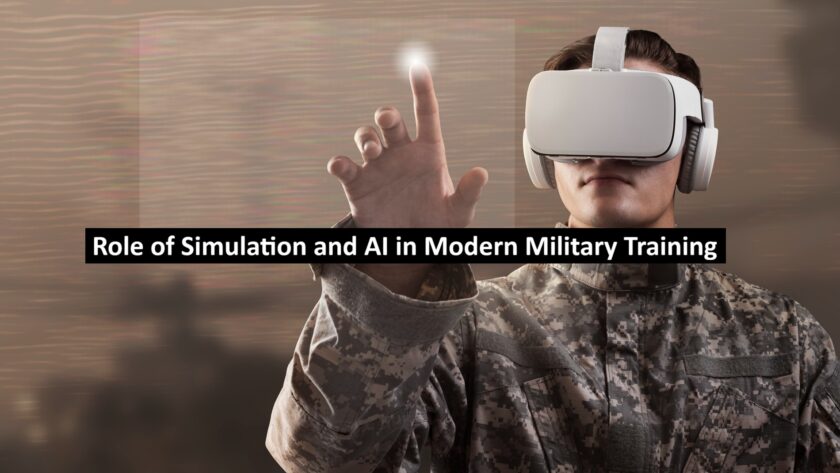
 Military simulation and training play a vital role in military training by replicating combat scenarios, weapon use, system performance, and procedures using simulation technology. This helps provide better training experience and relevance to military personnel. Military training and simulation are used by the armed forces, navy, and air force to provide a realistic, immersive environment. It helps to gain practice and closer working experience of a variety of circumstances, high-risk environments, and war scenarios.
Importance
Simulations help prepare soldiers by replicating real-world battlefield conditions by mimicking the terrain, surroundings, weather, and enemy behavior. It is a rehearsal of dangerous or rare events that helps the soldier be better prepared to reduce risk, save lives, and handle equipment during actual missions.
Simulations of high-risk scenarios, such as combat, urban warfare, rescue missions, or hostage situations, train the soldiers without having to engage in fights. This prevents injury or equipment damage while enhancing their ability to respond to high-pressure situations and hone their decision-making skills.
Military simulation and training do not require any physical equipment, ammunition, or travel to actual sites. This significantly reduces the training costs with maximum utilization of the training time by simulating large-scale military exercises. Scalability and repetition of scenarios under different conditions offer flexibility to offer customized training and increase adaptability and conduct training in multiple locations at the same time.
Military simulation and training help in increasing readiness to participate in missions while repetition of various scenarios builds muscle memory and tactical intuition in soldiers and officers. The replication of high-stress situations improves their reaction times, analysis, and decision-making skills, and helps gain hands-on experience to devise successful mission execution strategies. It also inculcates teamwork skills and enables effective communication development among the recruits.
Read: Top Trends Shaping the Future of Project Management
Technological developments in simulation and training
Extended reality technology, also termed XR, includes augmented, virtual, and mixed reality that create immersive training environments to mirror complex battlefield scenarios to help train military personnel to gain experiences and enhance their readiness to face real-world combat and war operations
AI and ML are being used to create realistic scenarios and increase efficiency. AI algorithms can analyze vast amounts of data from previous conflicts, combat situations, high-stress scenarios, and military exercises. These mimic real combat situations that enables soldiers to gain decision making insights while staying safe and in controlled environments while receiving feedback about their performance while also providing valuable guidance and gaining awareness about real-life combat operations.
Military training and simulation systems focus on comprehensive skill development by accommodating a wide range of tasks and disciplines ranging from military operations, medical emergencies, to casualty management. This ensures extensive training and preparation for the personnel.
AI Applications in complex aspects of military training
AI systems can create and modify a wide range of training situations that change on the basis of the action taken by the trainees. They also simulate unlimited complex and unique situations which allow the soldiers to experience unexpected circumstances and new challenges. It helps enhance the effectiveness and readiness of the soldiers to better prepare them to face real life combat.
AI applications use different methods and combine strategic scenarios by incorporating complex geopolitical scenarios and interactions between different states and countries to simulate turbulent and high-risk situations. It helps soldiers to gain valuable insights to understand and be better prepared for any possible political turmoil or upheaval.
AI uses advanced methodologies to solve complex logistics or supply chain management problems. They can inculcate demanding situations and complex variables and situations in simulations that keep changing in real time. Thus, these situations help soldiers analyze issues using modern approaches to manage supply and organize logistic movement while staying vigilant and alert, especially in war and high-risk situations. It increases the focus, alertness, and rapid decision-making skills of the soldiers.
AI simulations create chemical, biological, radiological, or nuclear threats or terrorist and militant attacks. These simulations combine scientific models using human behavior analysis to predict the reactions of the general population or victims in these substantial risks and challenging situations. These simulations can mimic the spread of dangerous chemicals or radiation spread and predict the way these threats and attacks affect infrastructure such as hospitals or power plants. All these simulations and scenarios help soldiers, disaster management, and crisis teams be trained to respond effectively and efficiently handle these critical and dangerous situations in a virtual, realistic, but safe environment.
AI helps train soldiers to rapidly learn and adapt to numerous situations. It helps them think flexibly while constantly being on their toes and adapting as per situation. The simulations also help soldiers focus on enhancing not just physical and mental but also cognitive and social abilities. Thus, it helps in the holistic development of military personnel to increase their resilience, mental proficiency, technical abilities, and decision-making skills under high pressure conditions.
Conclusion
Military training and simulation help train military personnel and increase their mission readiness and effectiveness in the face of evolved global threats which are changing the military operations landscape. These innovations and advancements ensure that the military personnel worldwide are better prepared to face situations and be ready to face any and every situation that may come up on the battlefield.